
-

4 -

Fire or stove -

Dogs welcome -

No or weak mobile signal -

1 Double 1 Twin

Overview


Photos by Charlotte Wood
Property details
Hidden deep within a Kentish woodland, just a short distance from the sea, this once-derelict former WWII gun tower has been sensitively transformed into a bright, modern retreat for four. With its thoughtfully designed spaces that encourage a constant connection between the indoors and out, a stay here offers an immersive escape into a peaceful world where architecture and nature seamlessly combine. With all the wonders of the Kent coast on your doorstep, there's plenty to explore nearby too.
Repurposed military design
Built in 1940 on a hilltop site to defend Britain from the Luftwaffe, the tower provided a fixed firing platform for a mighty 40mm Bofors anti-aircraft gun during WWII. When Bofors units became mobile, however, the structure became obselete, and after the war ended it lay abandoned for half a century.
In the early 2000s the then-crumbling building was re-discovered, rescued and sensitively restored as a minimalist dwelling to a scheme by Robert Maxwell of Allies & Morrison Architects. The result is an elegant and distinctive retreat filled with natural light, flowing spaces and striking architectural character, that celebrates the building's military past while providing comfortable, modern accommodation.
360-degree woodland views
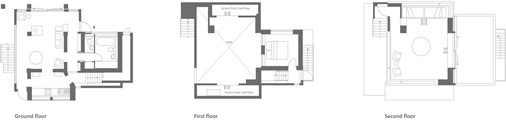
Upstairs, the original gun emplacement has been replaced by a roof terrace and top-floor living space, offering 360-degree views across the treetops and occasional views of the Thames Estuary. At the centre of the room, the original concrete gun mounting has been repurposed as a table. Lockers that once held spent shell cases now form storage and bed platforms, where two guests can sleep among the woodland canopy. The former ammunition store, from where shells were passed through hatches to the gun layers on the roof, now forms the main bedroom.
What this property offers


Floor plan
You might also like


History & restoration
Defending a secret frontline technology
Preparing for war in June 1939, the radar station at Dunkirk was designated by the War Office as one of just five most ‘Vulnerable Points’ in the country. To protect it from attack by enemy aircraft and even invading land forces, this gun tower formed the hub of the station’s defence, with a Bofors gun fixed to its roof.
This World War II Bofors anti-aircraft gun tower is one of the few remaining examples of its type in the country. It is a graphic reminder of the urgency of the strategic defence of Britain against the threat of invasion during the major conflict of the 20th century.
-

A static Bofors gun and crew in action during WW2. Image featured in The 40mm Bofors Gun, Terry Gander (1986)
-

The tower before restoration
Positioned deep in the north Kentish countryside a few miles southeast of Whitstable, this may seem an unlikely spot to be allocated such national importance, but the Dunkirk radar station was in the frontline of defences against anticipated bombing raids on London. Radar was a secret British technology that the Nazis did not know we had developed. Such radar stations provided long range early warning against incoming aircraft; protecting them was a high priority.
Fortification designs were urgently drawn up by the War Office. This specialised brick and concrete gun tower conforms to Type DFW 55087 and was hastily constructed after the outbreak of war on 1 September 1939. It was built to provide a fixed firing platform for a mighty 40mm Bofors anti-aircraft gun, renowned for its reliability, speed and accuracy.
Within the year, 40mm Bofors guns had become mobile units, making the tower obsolete for its original purpose. When the war ended, it lay abandoned for the next 50 years, subject to vandalism and decay.
Redolent of the modernist design revolution of the 1930s
Like many surviving Second World War military structures, including our current rescue project RAF Ibsley Watch Office, Bofors Tower has a distinctive architectural character rooted in the modernist influences of the 1930s. That quality was recognised in the early 2000s when the derelict tower was rescued and transformed into a minimalist holiday home.
While walking in the woods in 2000, the owners discovered the tower and saw its potential as a dwelling. They purchased the surrounding woodland along with the structure, despite having no certainty that planning permission for conversion would be granted.
Robert Maxwell of Allies and Morrison devised a scheme that preserved the tower's simple, robust form. The deteriorating concrete was repaired where necessary, while the original structure remained dominant. The sensitive approach earned the support of both English Heritage and the local conservation officer.
In 2026, the owners generously gifted Bofors Tower to Landmark, and we were delighted to welcome it into our portfolio. The building already embodies much of what makes a Landmark special, so only minimal work is needed before it opens to guests.
Availability & booking
Bofors Tower will open as a holiday retreat for 2 + 2 (with a double bedroom plus two top floor sleeping platforms) in autumn 2026.
Bookings for Bofors Tower will open on Tuesday 18 August.
Landmark Patrons and Friends enjoy early booking ahead of general release:
- Landmark Patrons on Tuesday 11 August
- Landmark Friends on Thursday 13 August